


ASA vs ABS: Which Filament to Use for Outdoor Parts, Car Interiors and Enclosures

Lina Reyes
November 21, 2026
You need a part that PLA and PETG cannot handle: a phone mount that bakes on the dashboard, a bracket that lives on the fence, or a project box near something warm. The two usual answers are ABS and ASA, and they look almost interchangeable on a spool label. They print at similar temperatures, warp in similar ways and both smooth with acetone. The real differences show up in a few specific situations, so this guide works through the jobs people actually print these materials for, then covers the printing and safety issues they share.
One ingredient apart: why ASA behaves differently in sunlight
ABS is acrylonitrile butadiene styrene. ASA is acrylonitrile styrene acrylate. Both use a hard styrene-acrylonitrile matrix toughened with tiny rubber particles. The difference is the rubber: ABS uses polybutadiene, whose chemical structure is vulnerable to ultraviolet light and oxygen, while ASA uses an acrylate rubber that holds up far better outdoors.
That one change accounts for most of the practical difference. Prusa’s knowledge base lists “lacks UV resistance (unlike ASA)” among ABS’s drawbacks and notes that ABS parts left outside turn yellowish and more brittle over time. It describes ASA as the successor to ABS, with better UV resistance, less warping and less odor. Not every brand frames ABS so negatively: Bambu Lab’s ABS datasheet lists UV resistance among the material’s general properties. Even so, Bambu markets its ASA, not its ABS, for outdoor parts, describing it as offering exceptional UV and weather resistance for signs, mailboxes and wind vanes.
Heat resistance: what the datasheets show
Heat deflection temperature (HDT) is the temperature at which a standard test bar bends a set amount under load. ISO 75 tests at two loads, 0.45 MPa and 1.8 MPa, and the lighter load gives the higher number. Here is what three makers publish:
| Material (source) | HDT at 0.45 MPa | HDT at 1.8 MPa | Vicat softening |
|---|---|---|---|
| Bambu Lab ABS (TDS V2.0) | 87 °C | 84 °C | 94 °C |
| Bambu Lab ASA (TDS V2.0) | 100 °C | 92 °C | 106 °C |
| Polymaker PolyLite ABS (TDS V5.6) | 100 °C | 98 °C | n/a |
| Polymaker PolyLite ASA (TDS V5.1) | 102.6 °C | 100.2 °C | n/a |
Two things stand out. First, ASA comes out slightly ahead within each brand, by a large margin in Bambu Lab’s figures and by about 2 °C in Polymaker’s. Second, the difference between brands is as large as the difference between materials: Polymaker’s ABS matches Bambu Lab’s ASA at the lighter load. Prusa gives a practical ceiling of 93 °C for ASA. Treat all these figures as upper limits rather than safe working temperatures, especially for parts under constant load.
Both materials are a clear step up from PETG, which typically deflects somewhere in the 60s or 70s °C depending on the brand.
Outdoor parts: ASA, with few exceptions
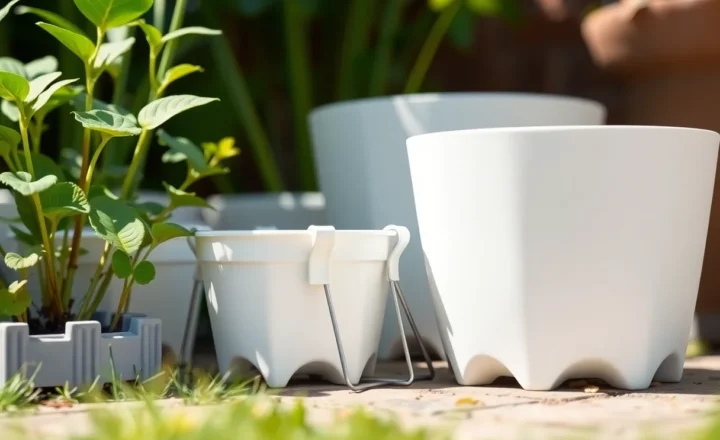
For anything that will sit in direct sun for months or years, such as garden fittings, mailbox numbers, camera mounts, bike accessories and vent covers, ASA is the better choice. Heat resistance is similar, but ABS’s butadiene rubber degrades under UV, so ABS parts tend to yellow, chalk and turn brittle sooner. Since the two print almost identically, there is little reason to choose ABS for outdoor parts.
ABS can still work outside in a few cases:
- The part is painted, which blocks UV from reaching the plastic.
- The part is shaded, under an eave, or inside another housing.
- The part is temporary, such as a jig or a one-season fitting.
For a deeper look at outdoor failure modes and how ASA compares with PETG and PLA, see our guide to the best filament for outdoor use.
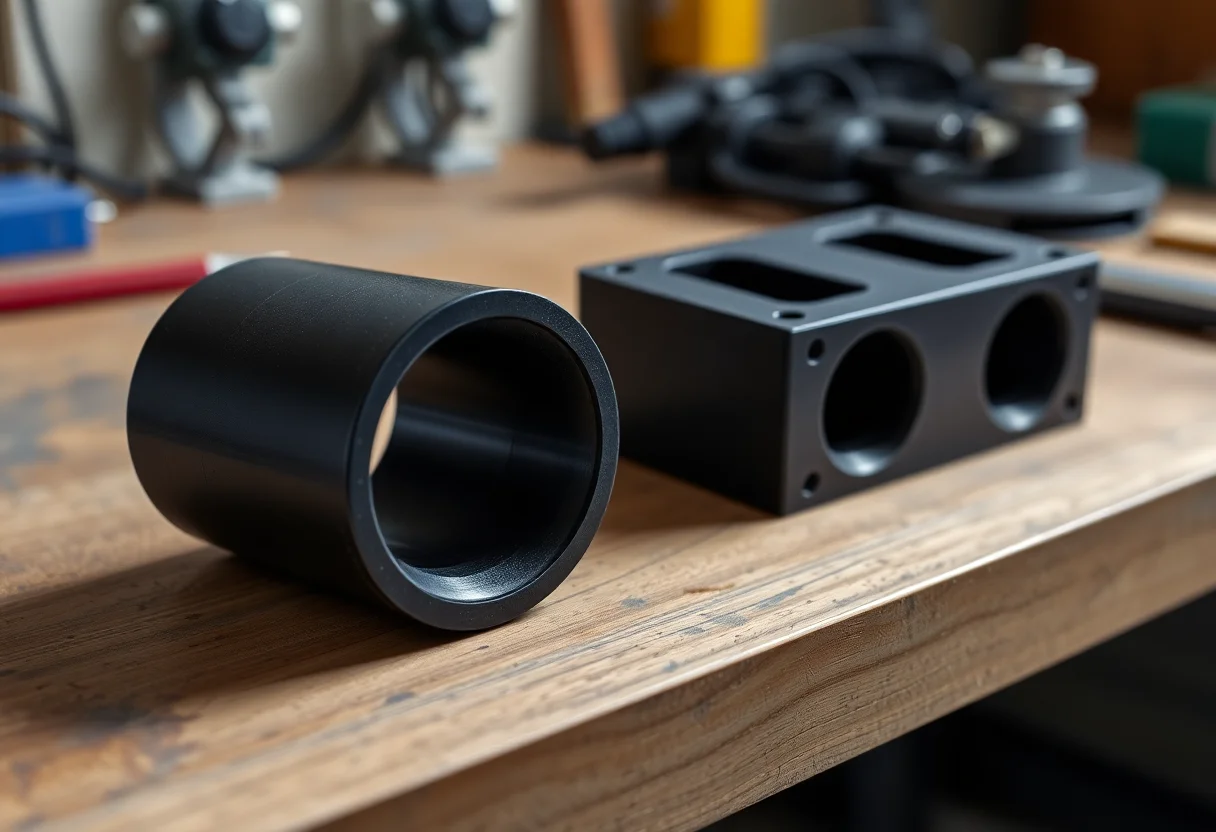
Car interiors: both survive the heat, ASA handles the sun
Car interiors combine heat and sunlight through glass. A 2018 study by Arizona State University and UC San Diego, cited in our outdoor guide, measured dashboards averaging about 69 °C (157 °F) after an hour parked in direct summer sun in Tempe, Arizona. Dark surfaces in direct sun can run hotter than that average.
Against those numbers, both ABS and ASA have a reasonable margin at the lighter test load, while PLA and many PETGs sit at or below it. How to choose between them depends on where the part goes:
- Dashboard tops, windshield mounts and parts behind glass: ASA. These spots get the most heat and the most direct sunlight in the car, and over several summers that sun exposure is where ASA’s weathering advantage pays off.
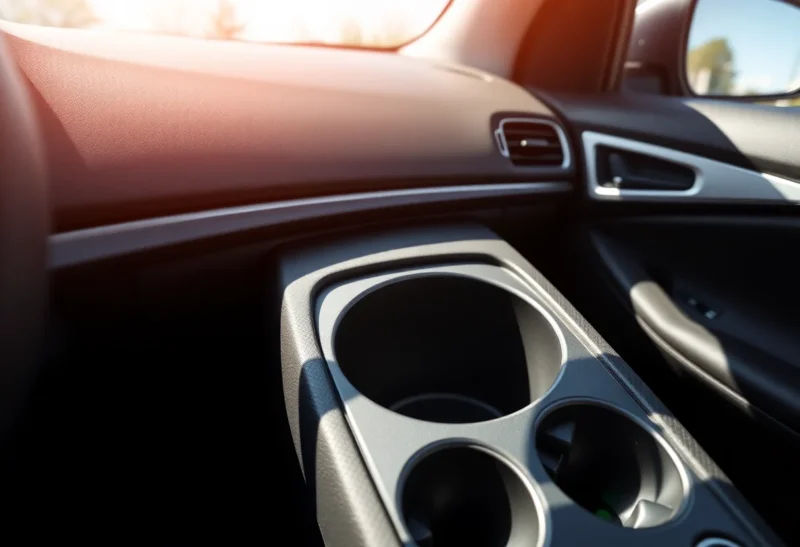
- Cup holder inserts, console organizers, door pocket trays, trunk parts: ABS is fine. These spots are warm but mostly shaded, and ABS is often cheaper.
- Engine bay parts: neither is a safe default. Under-hood temperatures can exceed both materials’ limits, so look at heat-resistant engineering filaments and check the maker’s ratings.
Use more walls, at least four perimeters, for car mounts that carry a load such as a phone. Heat lowers stiffness well before a part reaches its HDT, and thicker walls slow the sag. Parts that break or detach while driving can become a hazard, so check them regularly.
Electronics enclosures and project boxes
For indoor enclosures such as Raspberry Pi cases, sensor housings, battery boxes and control panels, ABS is the traditional choice and still a good one:
- It handles warm electronics better than PLA.
- Parts can be solvent-welded with acetone, so you can print a box in sections and bond them.
- It sands and machines well, so drilling holes for connectors and switches after printing is straightforward.
- It is usually a little cheaper than ASA from the same brand, and colors are widely available.
For enclosures mounted outdoors, such as weather station housings, junction boxes, outdoor camera covers or garden sensor boxes, use ASA for the same UV reasons as any outdoor part. In both cases, a printed box is not automatically watertight. Use gaskets, plenty of walls and sealant for anything exposed to rain, and remember that printed plastics are not a replacement for certified enclosures for mains-voltage wiring.
Parts for printer enclosures and hot workshops
Parts that live inside a heated printer chamber, near a hotend or close to motors see heat but no sunlight. ABS works well here, and many printer mods and replacement parts are designed for it. Prusa warns that printing a lot of ASA or ABS in a closed, unventilated enclosure can eventually deform printer parts made from lower-temperature plastics like the fan shroud, so it suggests even more heat-resistant materials such as polycarbonate blends for parts nearest the hottest zones.
Printing both materials: the shared challenges
Once you have chosen, the printing process is close to identical. The settings below come from manufacturers, so always check your spool’s label first:
- Nozzle: Bambu Lab lists 240–270 °C for both its ABS and ASA. Prusa recommends 255 °C for ABS and 260 °C for ASA.
- Bed: Bambu Lab lists 80–100 °C for both. Prusa recommends 100 °C for ABS (adjustable from 80 to 110 °C) and 105 °C for the first layer of ASA, then 110 °C.
- Chamber: Bambu Lab’s datasheets list a chamber temperature of 45–60 °C for both materials.
- Cooling: low. Bambu Lab lists 0–80 percent fan for both, and most guides recommend keeping it off or low except for bridges and overhangs.
- Drying: Bambu Lab recommends 80 °C for 8 hours for both. Its datasheets list saturated water absorption at 0.65 percent for ABS and 0.45 percent for ASA.
Warping, shrinkage and why an enclosure matters
Both materials shrink as they cool. Prusa estimates ABS shrinks about 1–2 percent after cooling, which pulls the corners of large flat parts off the bed and can split tall parts between layers. Prusa says ASA warps somewhat less than ABS, but it still lists significant warping as a drawback for both.
The fix is the same for both: keep the air around the print warm and still. Prusa considers an enclosure necessary for ABS and recommends one for larger ASA parts. Small ASA parts can often be printed on an open printer with a draft shield, which PrusaSlicer offers under its skirt and brim settings, and a brim. Our guide on why 3D prints warp covers bed preparation, brims and enclosure tricks in detail. If you are shopping for an enclosed machine, our Bambu Lab P2S vs P1S comparison looks at two common choices.
Fumes, VOCs and ventilation
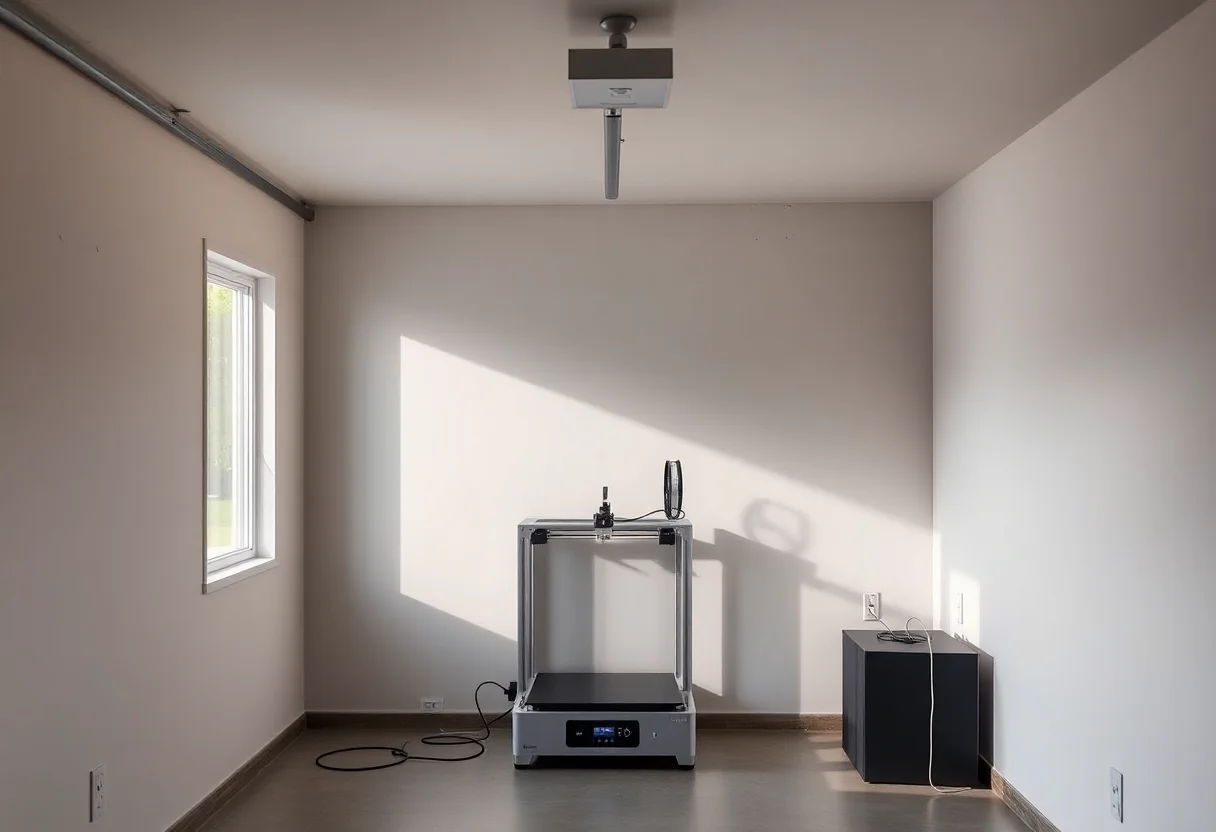
This is the part of the comparison that matters most for your health, and neither material is clearly safe to print in a small, closed room. Prusa warns that both ABS and ASA release potentially dangerous fumes, naming styrene, and recommends printing in a well-ventilated room without creating a draft across the print.
The research mostly covers ABS. A 2016 study in Environmental Science & Technology by Azimi and colleagues measured emissions from five desktop printers and several filaments and found styrene among the volatile organic compounds emitted in the largest quantities from ABS. The US EPA has summarized research showing that ABS produces more ultrafine particles than PLA. ASA has been studied less, but it contains styrene as well, and Prusa’s fume warning applies to both. Prusa notes that ASA has less odor, but a weaker smell is not proof of lower exposure.
Practical steps for both materials:
- Print in an enclosure and keep it closed until the part has cooled.
- Put the printer in a room you are not sitting in, with ventilation, or vent the enclosure to the outdoors.
- If you use a filter, choose one designed for both particles and VOCs, and replace it on schedule.
- Keep printers away from bedrooms and from children, pets and anyone with respiratory conditions.
See our safety disclaimer for general guidance. If you cannot ventilate properly, consider a lower-emission material. PCTG offers good toughness without an enclosure, though not the same heat resistance.
Acetone smoothing and gluing work the same way
Both materials dissolve in acetone, which is one of their biggest advantages over PETG. Prusa’s material guides confirm that ABS and ASA can both be vapor-smoothed for a glossy surface and glued or welded with acetone. In vapor smoothing, the part is exposed to acetone vapor in a closed container, which melts the surface slightly and blurs layer lines.
The trade-offs are the same for both:
- Fine details, sharp edges and text soften.
- Dimensions change slightly, which matters for press fits.
- Acetone is highly flammable and its vapor should not be inhaled. Work in a ventilated space away from ignition sources, never heat acetone, and keep the container away from your printer’s hot parts.
For bonding, a little acetone brushed onto both mating surfaces lets you weld printed sections into a single larger part, which is useful for enclosures bigger than your build plate.
Cost and availability
ABS is usually the cheaper of the two and comes in more colors from more brands, though the gap is often small and sales can erase it. Bambu Lab, Polymaker and many others sell both. Prusa’s current Prusament line includes ASA but not ABS, which reflects how ASA has become the default technical material for many hobbyists.
Matching the material to your part
- Outdoor part in sun: ASA.
- Dashboard or windshield mount: ASA.
- Shaded car interior part: ABS or ASA, whichever you have.
- Indoor electronics enclosure: ABS, or ASA if you already stock it.
- Outdoor electronics enclosure: ASA, with gaskets and sealing.
- Printer mod or hot workshop part: ABS is fine; consider PC near hotends.
- No enclosure and no way to ventilate: neither; look at PETG or PCTG and accept the lower heat limit.
If you plan to stock only one, ASA covers almost every job ABS does, adds outdoor durability and prints with nearly the same effort. ABS mainly makes sense when price, color choice or an existing design calls for it.